Log Homes vs. Timber Frame Homes: What’s the Difference & Which Is Right for You?
If you’re dreaming of building a custom home with a rustic, natural aesthetic, you’ve likely considered both log homes and timber frame homes. While these two architectural styles may appear similar at first glance, they differ significantly in construction, appearance, energy efficiency, and long-term maintenance.
In this guide, we’ll break down the key differences between log homes vs. timber frame homes to help you choose the best fit for your lifestyle, location, and vision.
1. Construction Style
Log Homes
Log homes are built by stacking logs horizontally to form both the structure and the visual design of the home. The logs are load-bearing and visible inside and out, offering a classic, rustic charm.
Popular log home construction methods:
Full Scribe: Logs are custom-fitted by hand for a tight, seamless look.
Chinked Style: Gaps between logs are filled with flexible material known as chinking.
Milled Logs: Logs are precision-cut by machines for consistent sizing, then finished by hand.
This solid-log construction offers durability and charm but requires skilled craftsmanship to ensure a proper structural fit.
Timber Frame Homes
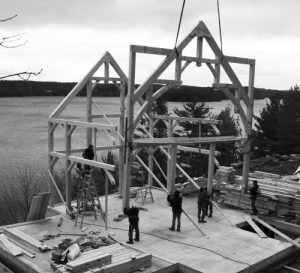
Timber frame homes are constructed with large, exposed wooden beams that form a structural skeleton. These beams are joined using traditional joinery like mortise-and-tenon joints. The walls are typically made of Structural Insulated Panels (SIPs), stone, or siding.
Types of timber frame construction:
Full Timber Frame: Beams are used throughout the entire home, visible in every room.
Hybrid Timber Frame: Combines timber frame elements (often in living areas) with conventional framing or SIPs in other parts of the home. Sometimes, it includes log walls + timber accents, either decorative or structural.
2. Aesthetic Differences
Log Homes
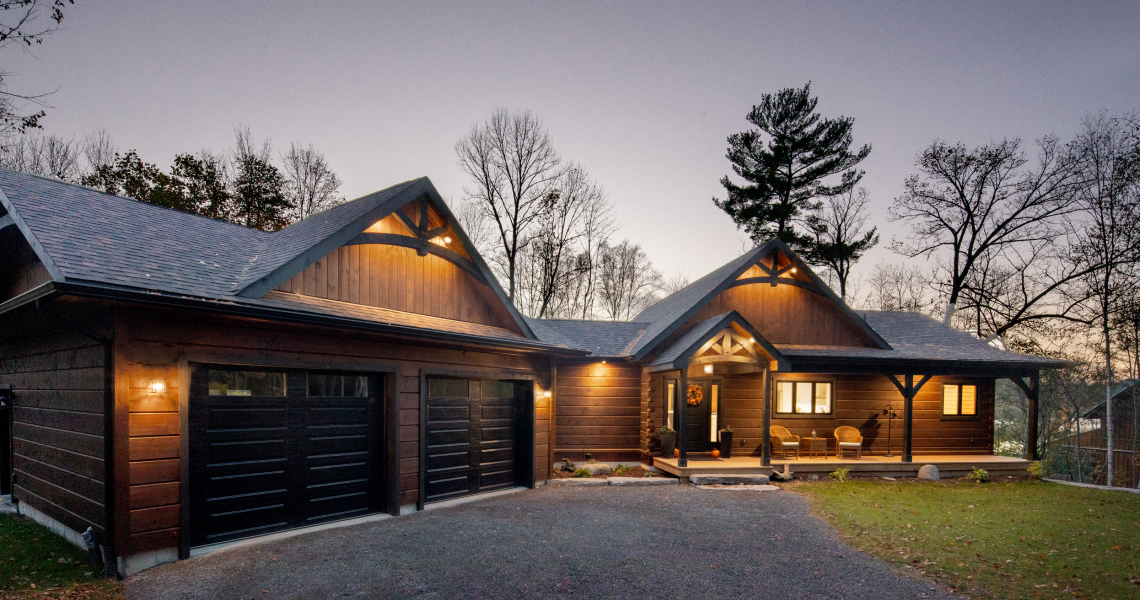
The log walls create a warm, cozy cabin-like feel that blends beautifully with wooded or mountainous environments. Interiors often feature exposed wood ceilings and rustic finishes throughout. Today’s modern log homes mix contemporary finishes to provide a mountain modern aesthetic.
Timber Frame Homes
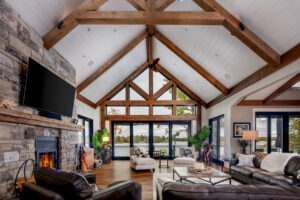
Timber frame homes are more flexible in design. Exposed beams provide elegance and drama, while the surrounding materials—stone, drywall, siding—allow for a mix of modern and traditional styles. Their open layouts and vaulted ceilings offer stunning visual appeal. Often confused for log homes, a timber frame home is one of the oldest and strongest building systems that provides the warmth of wood and a strong skeleton or bones for your home.
3. Energy Efficiency
Log Homes
Logs have natural thermal mass, meaning they store and release heat slowly—helping regulate indoor temperatures. However, gaps between logs must be properly sealed to prevent drafts, and additional insulation (such as SIPs in the roof system) is often recommended.
Note: Thicker logs generally provide better insulation and thermal mass. Triple sealed log assemblies virtually eliminate air infiltration. Not all log systems are built equally!
Timber Frame Homes
With SIPs or spray foam insulation built into the walls, timber frame homes are generally more energy-efficient than traditionally built or stick framed homes. They provide a tighter thermal envelope, improving energy performance and reducing heating/cooling costs over time.
4. Maintenance Requirements
Log Homes
Regular maintenance is essential for protecting the wood from weather, moisture, and pests.
Key maintenance tasks include:
Reapplying stain or sealant every 3–5 years
Inspecting for cracks or settling
Treating for insects like carpenter bees or termites
Timber Frame Homes
Because the timber beams are typically protected behind insulated wall systems, maintenance is lower. Interior beams are not exposed to weather, reducing the risk of moisture or insect damage.
5. Cost Considerations
Log Homes
Log homes can be more budget-friendly initially, especially for smaller or simpler designs. In some cases, builders use SIPs between log siding for modern insulation with rustic looks.
Timber Frame Homes
Timber framing typically involves higher upfront costs due to the labor and craftsmanship involved. However, improved energy efficiency and reduced maintenance often result in long-term savings.
6. Customization and Design Flexibility
Log Homes
Log homes are beautiful but generally follow traditional floor plan styles. Customization is possible but limited by the log stacking and structural constraints of the log wall system.
Timber Frame Homes
Timber frames offer maximum flexibility in design. From modern open-concept layouts to vaulted ceilings, large windows, and unique roof lines, the possibilities are vast. The non-load-bearing walls can be configured however you like.
Which One Is Right for You?
Choosing between a log home and a timber frame home comes down to personal preferences, maintenance expectations, and budget:
Choose a log home if you love the cozy, rustic cabin aesthetic and are comfortable with the maintenance involved.
Choose a timber frame home if you want modern energy performance, greater design flexibility, and a mix of rustic beauty and contemporary living.
Either way, both styles offer timeless charm, durability, and a deep connection to natural materials—making your dream home feel truly special. And you can always blend the two systems together!